A small-parts bagger may solve bag presentation while leaving kit assembly manual. Choose it by the complete job you need to perform, including loading, checking and clearing the next SKU.
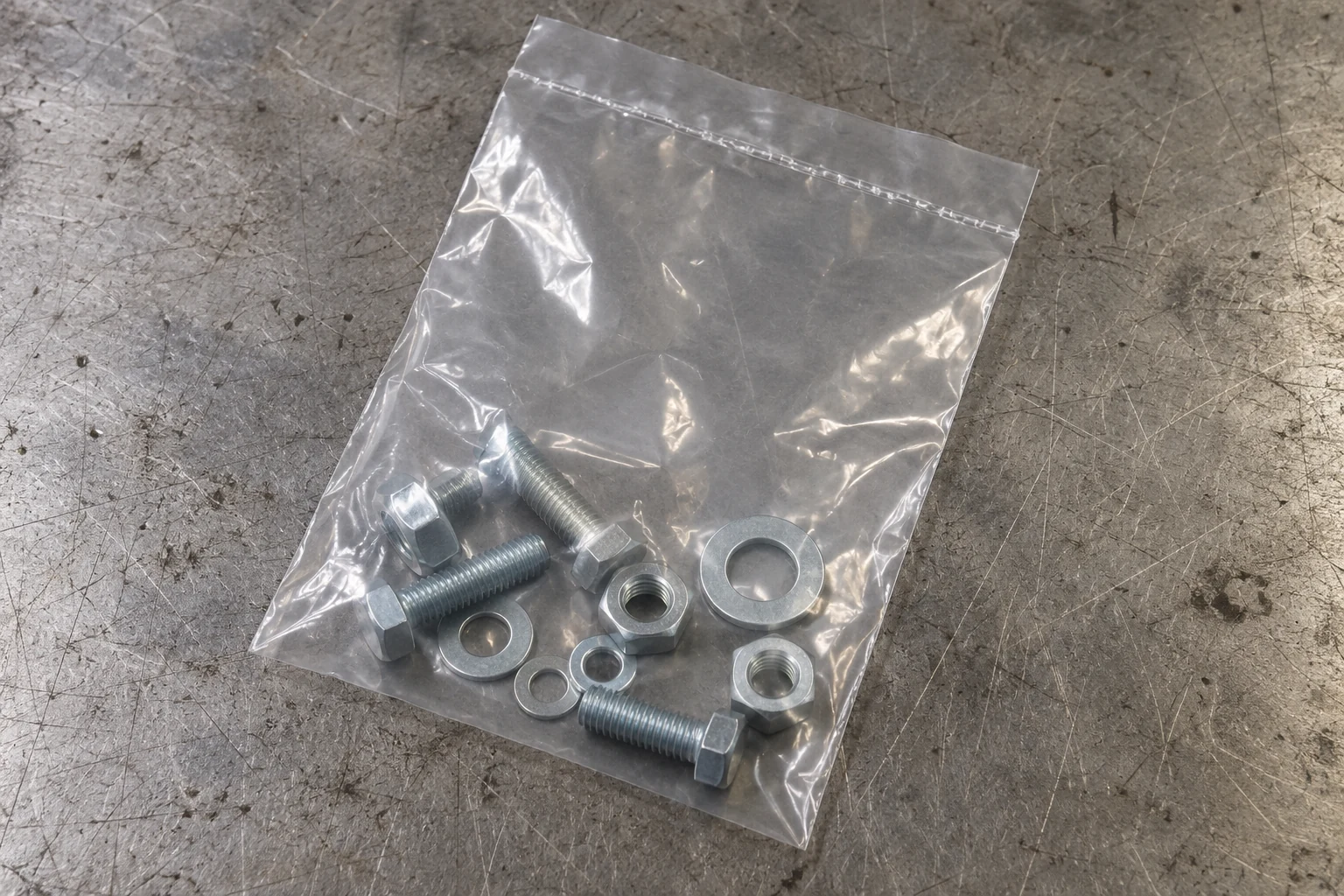
Start with manual loading when kit contents change often and people must identify each component. Evaluate assisted presentation and sealing if those steps cause the queue. Add automatic feeding only after actual parts have shown that they can separate, count and transfer reliably under the intended trial conditions.
Give each option the same task
Compare the same parts, bag structure, label requirement and acceptance rules. A preassembled kit dropped into a bag is a different task from individually selecting components at the station. Specify which one the demonstration represents.
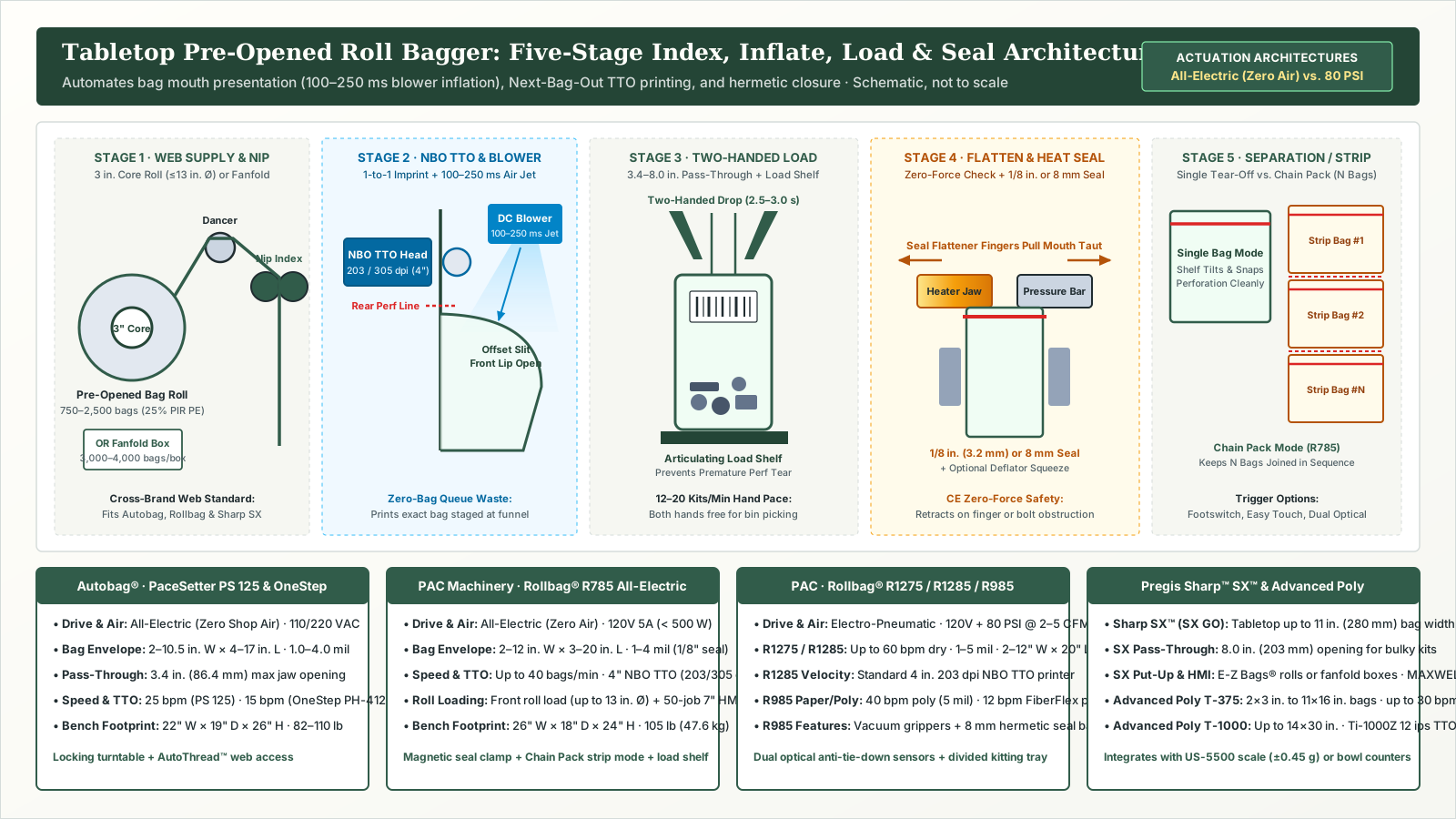
PAC Machinery’s Rollbag brochure, Bagger Basics describes manual or automatic feeding of pre-opened bags. Its product-feeding section also lists counting and weighing options. These are distinct configurations; a tabletop bagger’s existence does not establish an integrated kitting function. For benchtop machine specifications, slit-lip blower inflation mechanics, and Next-Bag-Out thermal transfer printing math, see our tabletop bagging machine and pre-opened roll bagger workstation guide.
| Arrangement | Good starting condition | Trial must include |
|---|---|---|
| Loose bags, manual closure | Infrequent jobs or changing unusual parts | Bag opening, closure consistency and handling time |
| Hand-load bagger | Operator still selects contents; bag handling is repetitive | Bag support, load clearance, seal-area cleanliness |
| Counter-assisted station | Repeated identical pieces that can be separated | Nesting, doubles, missed pieces and recipe change |
| Mixed kit with several infeeds | Stable definition and justified integration effort | Identity, synchronization, incomplete-kit response |
Evaluate these four workstation arrangements against your actual SKU mix and changeover frequency.
Inspect the part-to-bag relationship
Bring the longest component, the heaviest kit and the sharpest permitted feature, along with ordinary production samples. Check the loaded bag’s shape and the operator’s loading path. The nominal width of a flat bag does not directly describe the opening available around a bulky part.
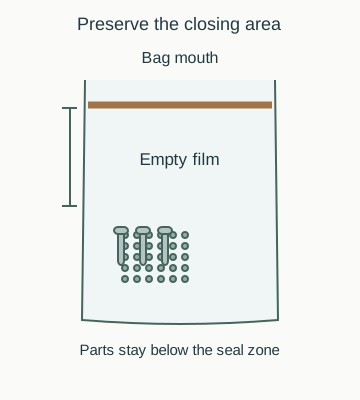
Preserve enough empty film for a consistent closure without parts entering the sealing area. Because the required headroom depends on the bag width, loaded part bulk, and sealer jaw geometry, verify the exact bag length with a physical sample pack on the supplier’s machine setup. If filled pouches are transferred downstream to a rotary band heat sealer, check the horizontal conveyor drop or upright free-bag-top clearance in our band sealer machine setup guide.
Sharp or abrasive parts may require another bag structure, orientation or protective feature. Assess leakage or puncture after the handling conditions relevant to the shipment. A clean new bag on the bench cannot establish transport suitability.
Test changeover with an ordinary operator
Include removing the previous components and labels, changing bags or settings, clearing the count and approving the first piece. Record interventions and rejected packs during that transition. A demonstration prepared by a specialist can conceal the repeat work needed for every short order.
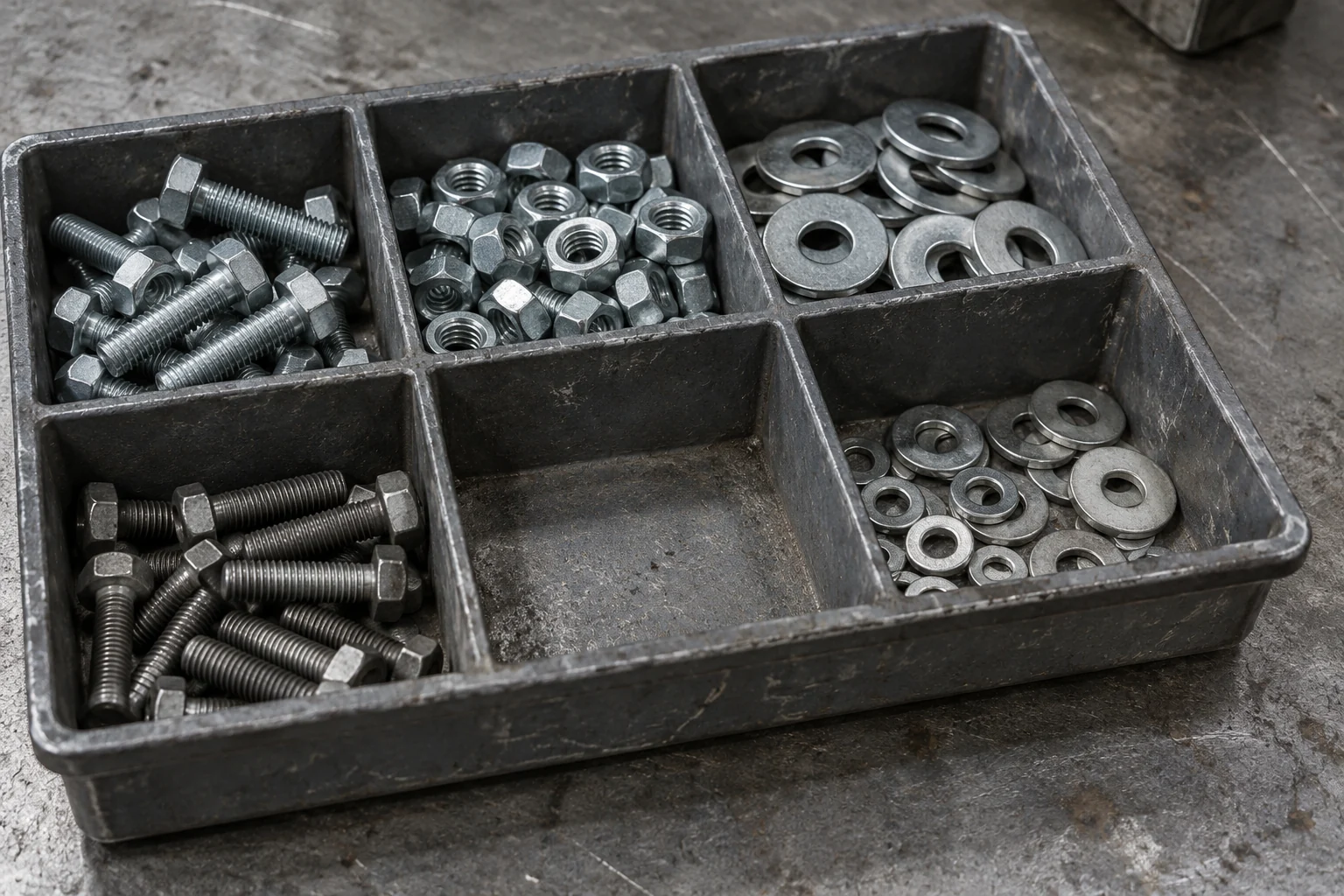
For counted parts, include known challenges and a way to keep them out of accepted work. If similar components share a feeder, prove how the station prevents the wrong SKU or revision entering the kit. Use the quality-control matrix to define that decision before testing.
Record accepted kits over the full trial
Start the observation at a defined setup state. Log order quantity, operators involved, paid time, replenishments, interruptions, completed packs and accepted packs. Keep rejected and held quantities separate. Describe who performed the final check and why it represents routine work.
Trial the high-mix sequence, not just the easiest repeat kit. Compare the total labor and consumables using the kitting cost worksheet. If a faster bagger simply moves a queue to component selection, address that upstream step before scaling the machine.
Methods and scope
Manufacturer literature supports the operational distinction between pre-opened bag presentation, heat sealing, and automated part feeding. Use this sample set and trial record to qualify small-parts bagging workstations, and return to kitting equipment for related workstation checks. Updated October 2026.