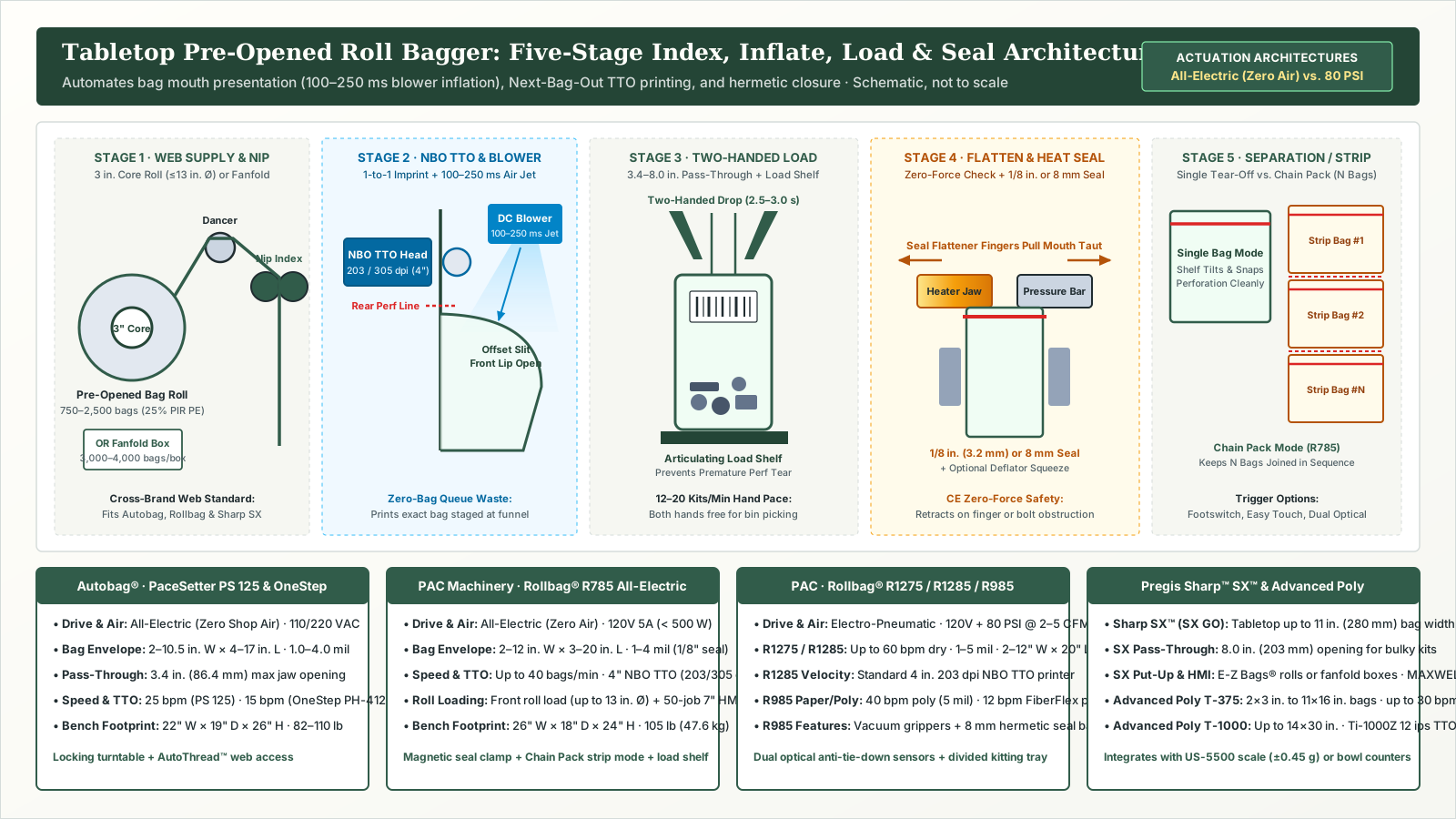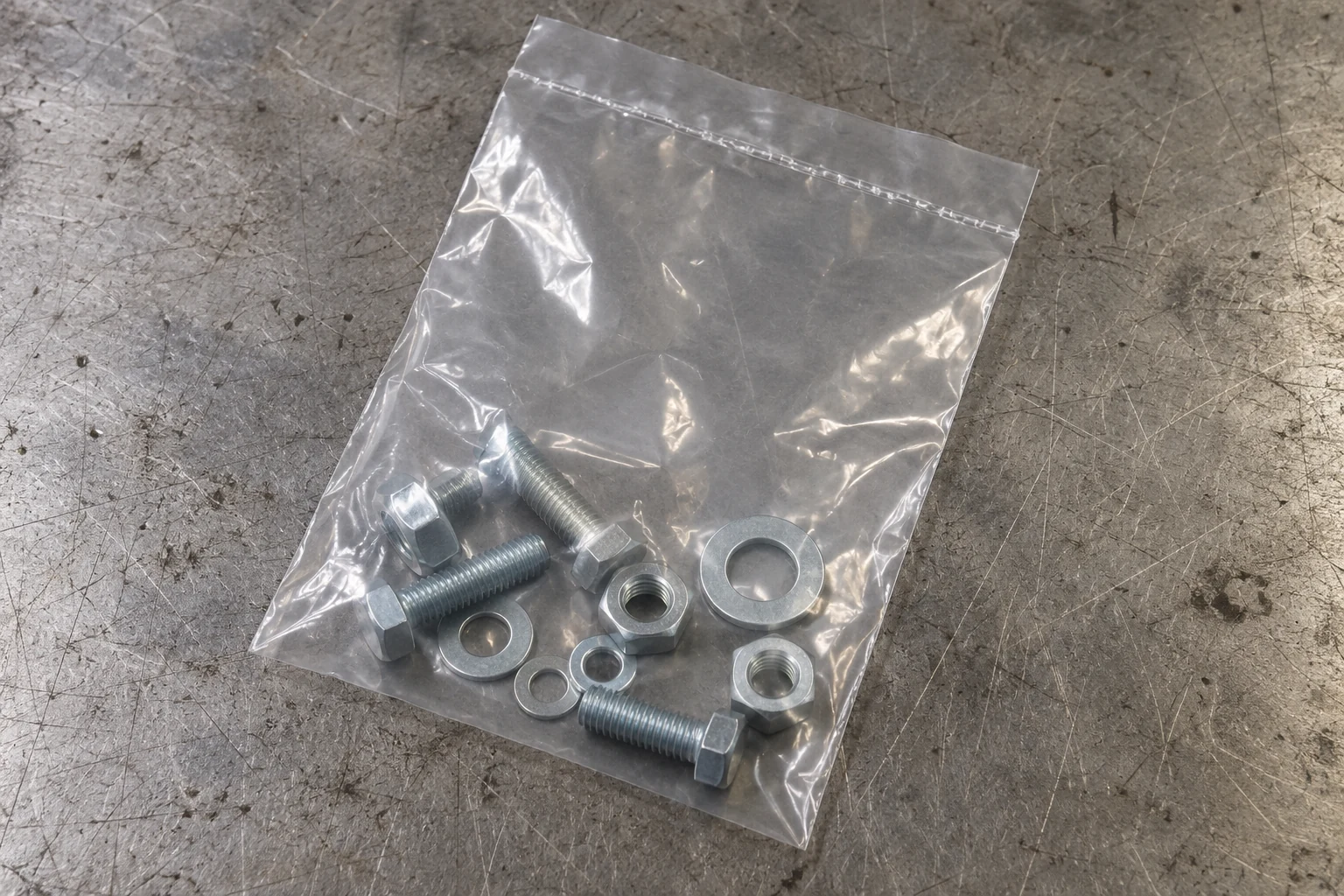
A correct total count can conceal the wrong component. Build kitting quality control around the errors that matter: identity, quantity, revision and the final package.
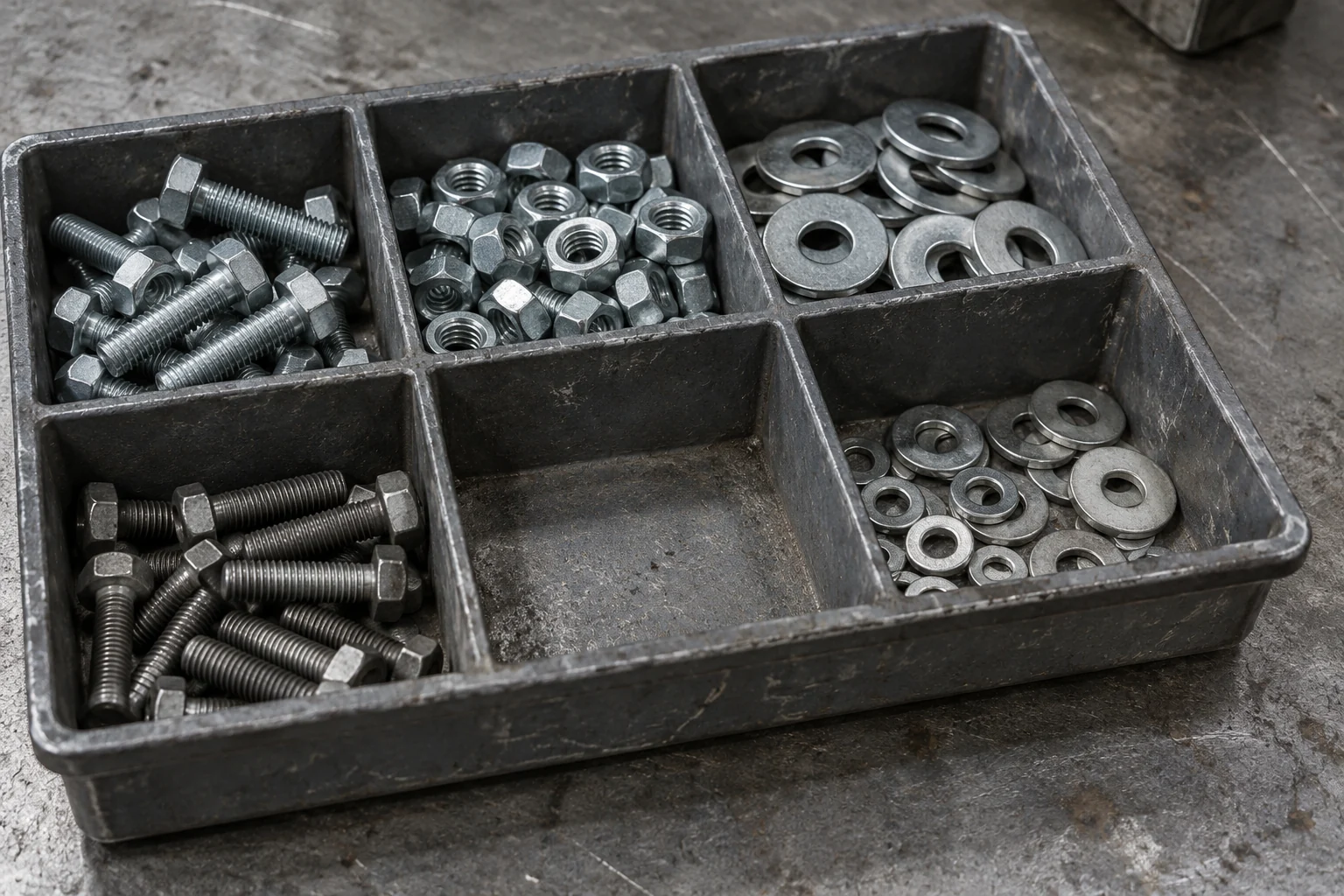
Use a separate check for each failure mode and prove the check with known challenge examples before relying on it. Counting helps with quantity; an identity check addresses the part or version; release control prevents an uncertain kit from reaching accepted output. A camera, scale or scanner needs a defined decision and a recorded response to failure.
Define the error before choosing a detector
List the kit’s components and the consequence of a missing, extra or substituted item. Two bolts may differ in length while looking similar at arm’s reach. A total weight measurement can be useful, but it cannot establish identity when acceptable and unacceptable combinations overlap within normal material and measurement variation.
Interlake Mecalux’s kitting description connects component lists, picking tasks and completion reporting. Use that sequence to identify where an error first becomes detectable. Avoid waiting until a sealed bag obscures a critical feature.
| Failure | Candidate control | What still needs checking |
|---|---|---|
| Missing identical piece | Validated count or count-by-weight method | Nested pieces and variation in individual mass |
| Wrong similar-looking part | Part identity at source; suitable feature comparison | Correct revision and mixed stock |
| Wrong kit quantity | Order-linked count and reconciliation | Held or reworked units counted as accepted |
| Wrong label | Current artwork/job match and first-piece review | Correct label on an incorrect kit |
| Closure fault | Defined seal or package acceptance | Contents remain a separate decision |
Evaluate each candidate control with the exact component geometry, weight distribution, and workstation presentation.
Challenge the check with known errors
Prepare controlled examples that represent the failure modes in the table, keeping them separate from saleable work. Include a correct kit, a missing piece, an extra piece and a plausible wrong part where relevant. Add difficult presentations such as overlap or nesting if they occur in production.
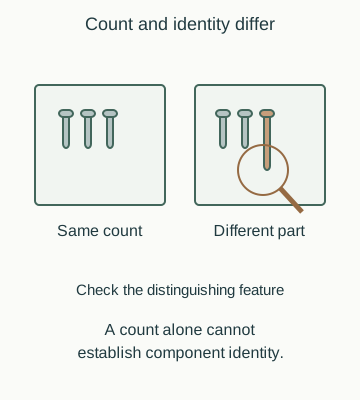
Record what the device or operator reports, what action follows and whether the suspect kit can accidentally re-enter the accepted stream. A detector that identifies a problem but leaves the operator free to pack it as good has an incomplete control path.
Set the required challenge frequency and acceptance criteria through the site’s quality plan, tying each verification pass to the recorded component lot, scale or vision setup, and operator sign-off.
Preserve a clear hold-and-release boundary
Put suspect kits in a separate, identified container with the reason and job reference. Decide who can inspect them, approve rework and authorize return to the process. Preserve the original failure record after correction so repeated errors remain visible.
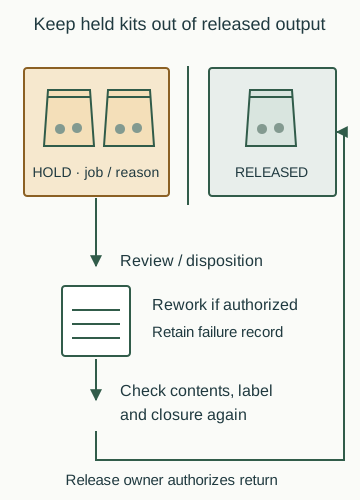
If a kit is opened to correct its contents, reassess its packaging and label after rework. The earlier release decision no longer describes the finished unit. Reconcile scrapped bags and labels so they cannot be confused with accepted output.
PAC Machinery’s bagger brochure lists counting and weighing as feeding-system options. Their presence is a reason to ask about the control interface; it is not evidence that a chosen system verifies every component.
Keep a release record an operator can complete
| Record field | Decision it supports |
|---|---|
| Order, kit revision and component lots | Which definition and material were used |
| Check method and device/setup reference | How the decision was made |
| Challenge examples and result | Whether the check responded as intended |
| First-piece approval | Permission to begin the job |
| Good, held, reworked and rejected counts | Reconciliation without double counting |
| Exception, disposition and release owner | Who resolved uncertainty |
Follow a failure with an actual decision: contain the affected interval, determine which kits require review and record the basis for release. Do not assume that the most recent good challenge proves every earlier pack was correct.
Method and next decision
Pair this error-control and release-record structure with the kitting equipment collection for workstation boundaries and the bagging trial guide for qualifying feeding and bagging options on your floor. Updated October 2026.