A peel plate left at the last bottle’s height wastes the next SKU when the edge meets the glass or the label flags past the tip. The miss is copying one head’s angle band onto a different machine.
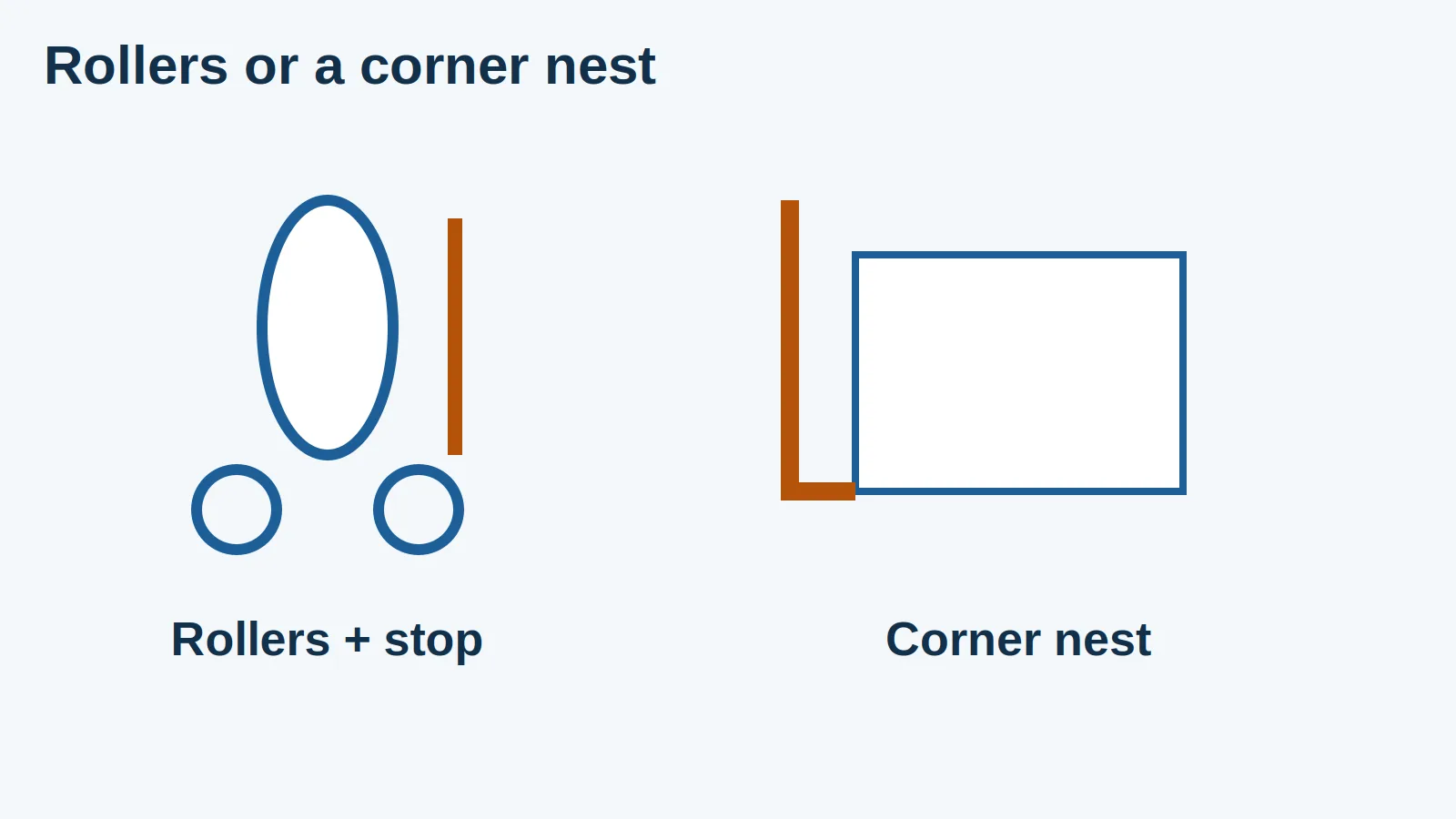
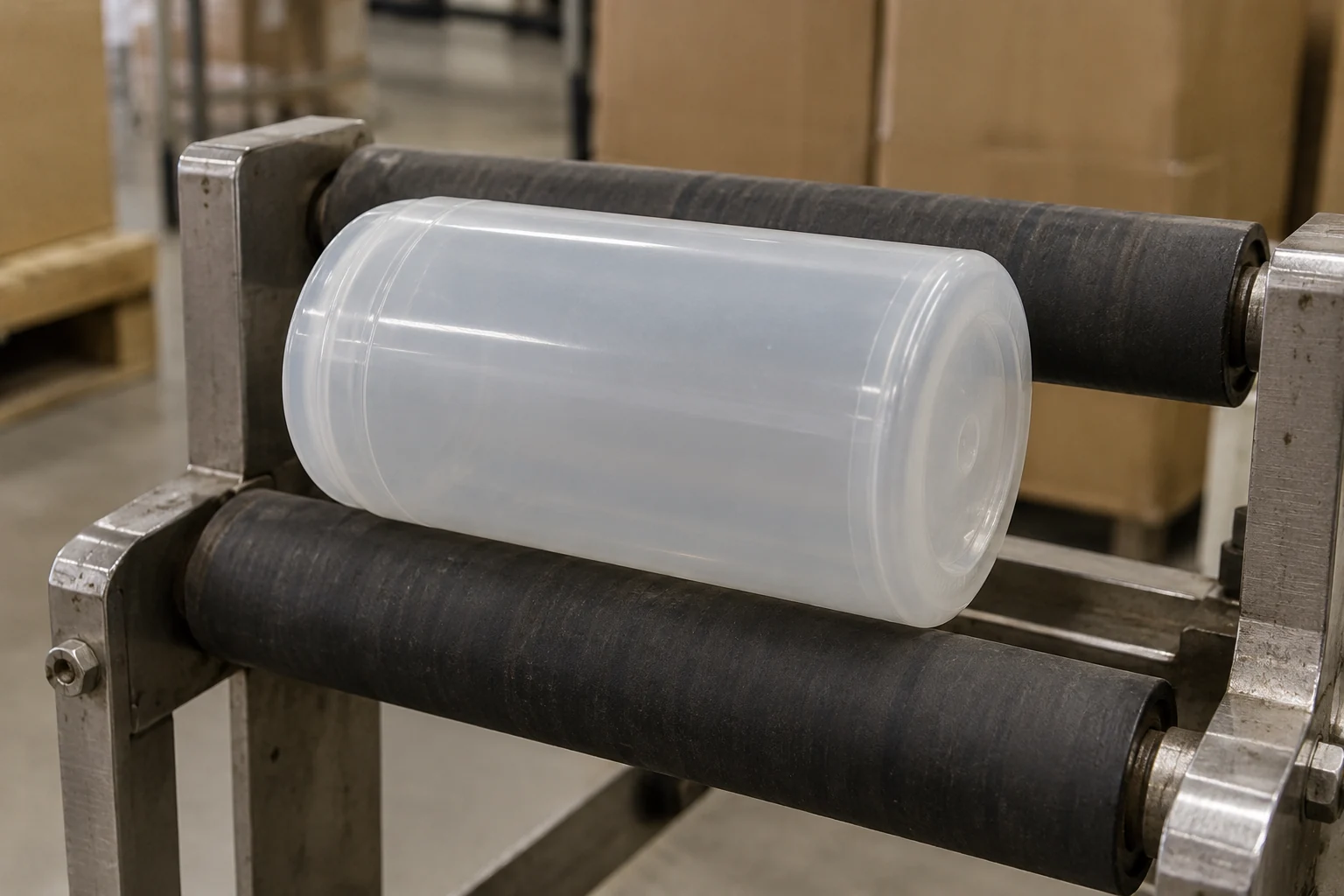
Reset the peel edge to that head’s published angle and gap, then pick the sensor from the face stock. An optical fork on a transparent label is the case the di-soric OGUTI row marks not suited. The bench fixture and first-piece record stay on the labeling workstation page. Round-bottle rollers and flat-box nests are on the jig page.
Three heads publish three different bands
These are wipe-on and conveyor heads, not a single tabletop model. Use the row that names the head in front of you.
| Head | Published geometry | Dominant Failure Mode & Prevention |
|---|---|---|
| QLC 3115NV, manual Rev.01 (2010) | Peel edge at 15–25° to the top of the product, or 15–25° to the side of the conveyor. Edge 1/8 inch from the tallest point (top) or the widest point (side). | Leaving the head at the previous height. QLC states that a wrong angle or distance makes placement vary. Keep the conveyor off the plate. |
| Nita SynerG XP100, 100T, 200, 200T, 2015 manual | Label exit about 15–20° to the application surface. Vertical and lateral positions go on the gradient rulers and into the recipe. | Saving the ruler and skipping the gap-sensor-to-peel-plate distance. That distance changes when the peel angle moves. |
| Diagraph 7000 Series wipe, manual 404011 Rev C (2021) | Peel-blade angle between 20° and 45°. Shorter labels need the steeper end. Labels longer than 50.8 mm (2 in): move the wipe brush away from the peel edge and angle the brush to 45°. | Wrinkles from a wrong peel angle, a brush sitting on the peel edge, or a loose hold-down plate. Do not import the 3115NV 15° floor. |

Two published bands drawn on the same product height. The left plate is the QLC 3115NV range. The right pair is the Diagraph 7000 wipe range, with 45° as the steep end. Schematic, not a measured setup.
Remaining clearance (mm) = 3.175 − extra height (mm).
The 3.175 mm is QLC’s 1/8 inch, converted as 25.4 ÷ 8. Extra height is how much taller the next container is than the one the head was set on. Worked example, with a hypothetical 4 mm taller container and the head left in place: 3.175 − 4 = −0.825 mm. A negative result means the plate intersects the container. The 4 mm is an assumed difference used only to show the arithmetic. It is not a bottle from a catalog.
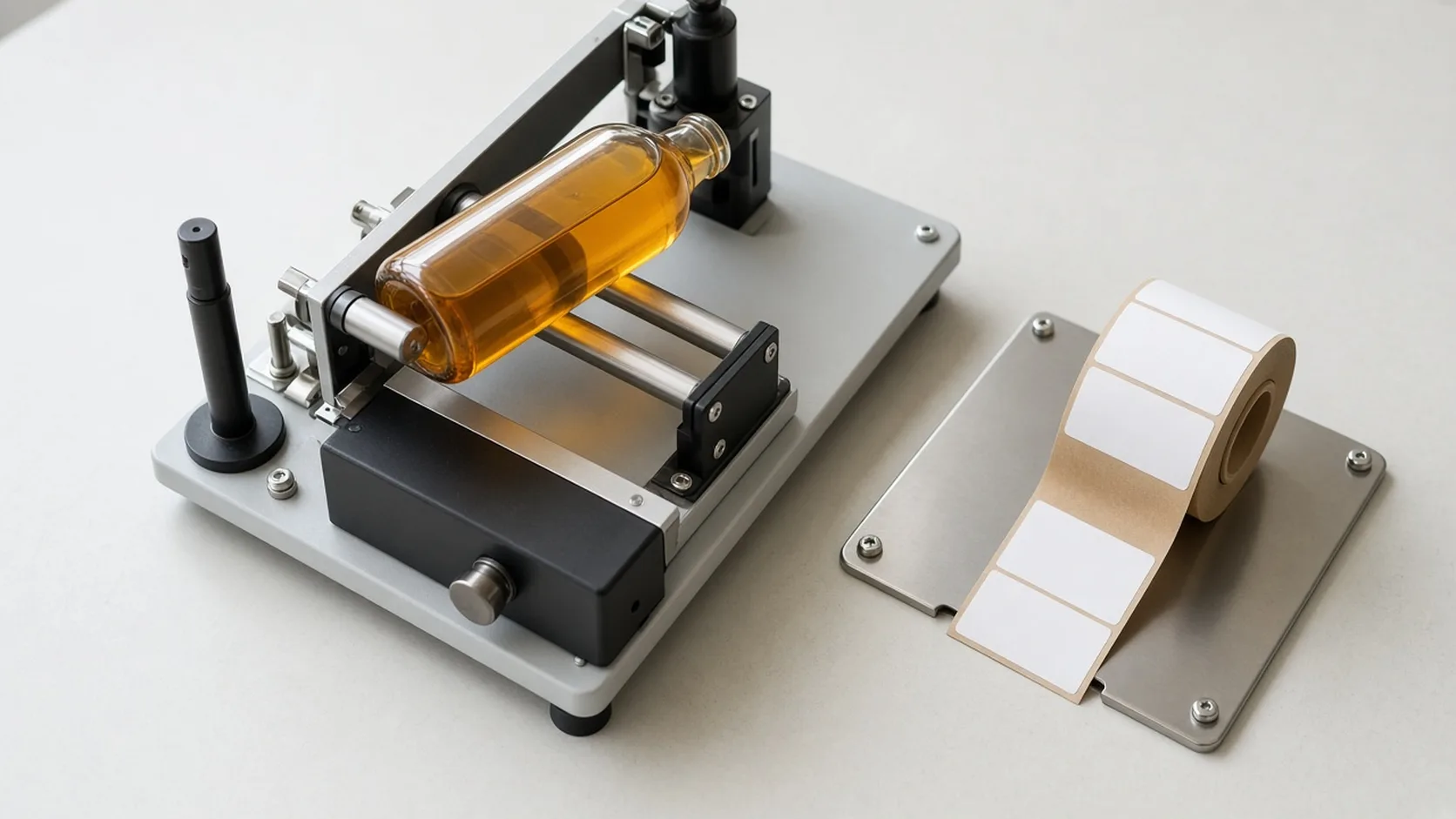
The roll is sitting beside the fixture, not threaded. The photo does not show a peel angle, a sensor, or a measured gap.
Match the fork to the stock, not to the wattage of the head
di-soric brochure 100034-0000EN (file 202401) rates three fork families. The suitability marks below are the printed matrix. Speed and reproducibility are separate rows, and the footnotes do not let you add them into one operating point.
| Family | Transparent | Metallized | Thick labels over 0.9 mm | Published maxima |
|---|---|---|---|---|
| OGUTI optical | Not suited | Suited | Suited | Tape speed ≤ 500 m/min. Reproducibility ≤ 50 µm. Response 0.16 ms. Maximum label-tape thickness 4.9 mm. |
| KGUTI capacitive | Suited | Partially suited | Not suited | Tape speed ≤ 500 m/min in speed-sensor mode, and that mode depends on the label and carrier. Reproducibility ≤ 100 µm in precision-sensor mode. Response 0.3 ms is also marked for speed-sensor mode. Maximum thickness 0.9 mm. |
| UGUTI ultrasonic | Suited | Suited | Suited | Tape speed ≤ 250 m/min. Reproducibility ≤ 200 µm. Response 0.25 ms. Maximum thickness 5.9 mm. |
Thickness overrun (mm) = 5.9 − 0.9 = 5.0.
A tape at the UGUTI maximum thickness is 5.0 mm above the KGUTI maximum. That tape sits in the KGUTI cell marked not suited for thick labels, and inside the UGUTI thickness the brochure lists. Lion Precision’s clear-label note says a traditional optical sensor does not see a clear edge because the light passes through the label. On Lion’s own models, the LRD2100 differential capacitive sensor has trouble with high-carbon black ink, the LRD6300 single-ended capacitive sensor stops at solid metal foil, and the LRD8200 ultrasonic sensor is the one they name for solid foil. Lion also states that LRD8200 accuracy is tied to web speed. Those model limits are Lion’s, not di-soric’s, and the two catalogs do not share a speed number.
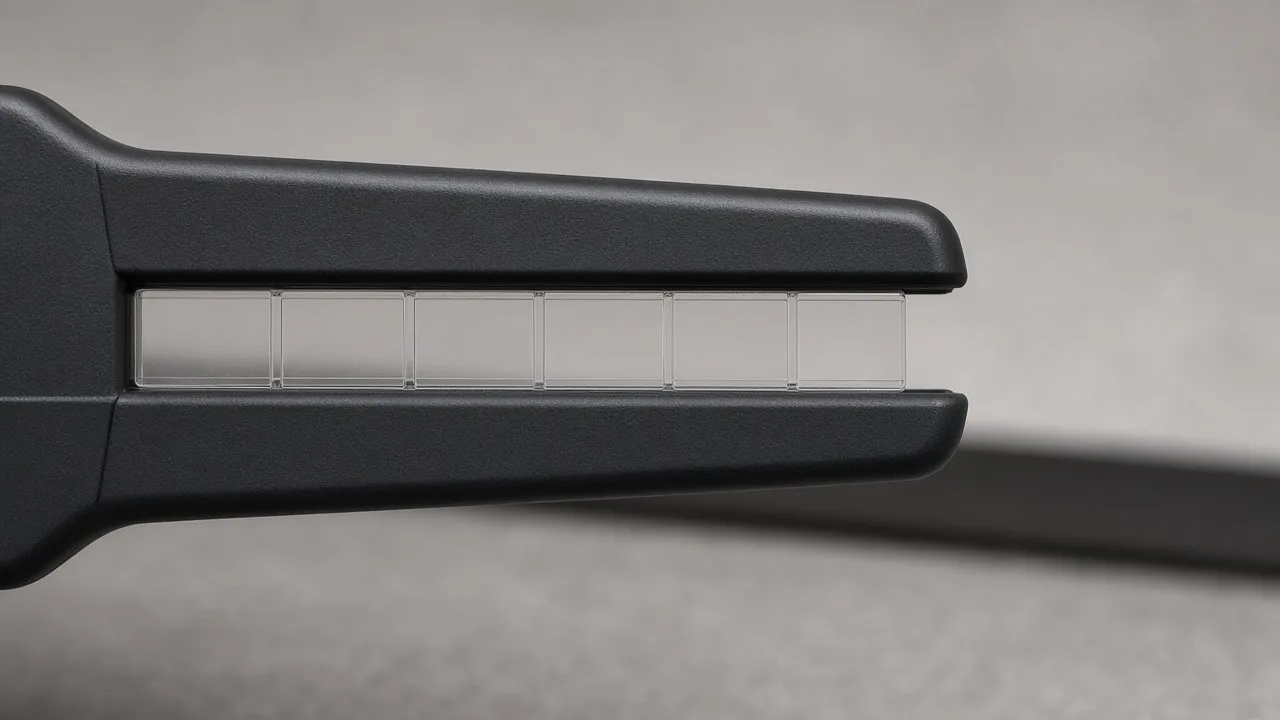
The slot and the gaps are visible. The photo is not a di-soric, Lion, or other named sensor, and it shows no teach result.
Save the ruler and the sensor distance together
On the SynerG XP, vertical position (letter A) and lateral peel-plate position (letter B) are read from gradient rulers and stored in the recipe. The manual’s normal-mode page defines gap-sensor-to-peel-plate distance as the path from the gap sensor to the peel edge. Its drawing uses 200 mm as the value for that drawing. The same page says the value changes when the peel-plate angle changes, and that each recipe has to keep its own value. Treat 200 mm as the drawing’s example, not a setpoint for a 3115NV or a 7000.
That manual also says the GAP sensor and the product sensor are adjusted on the HMI, and that those sensors are not physically moved. A changeover note that says “slide the eye” fights that instruction on this machine.
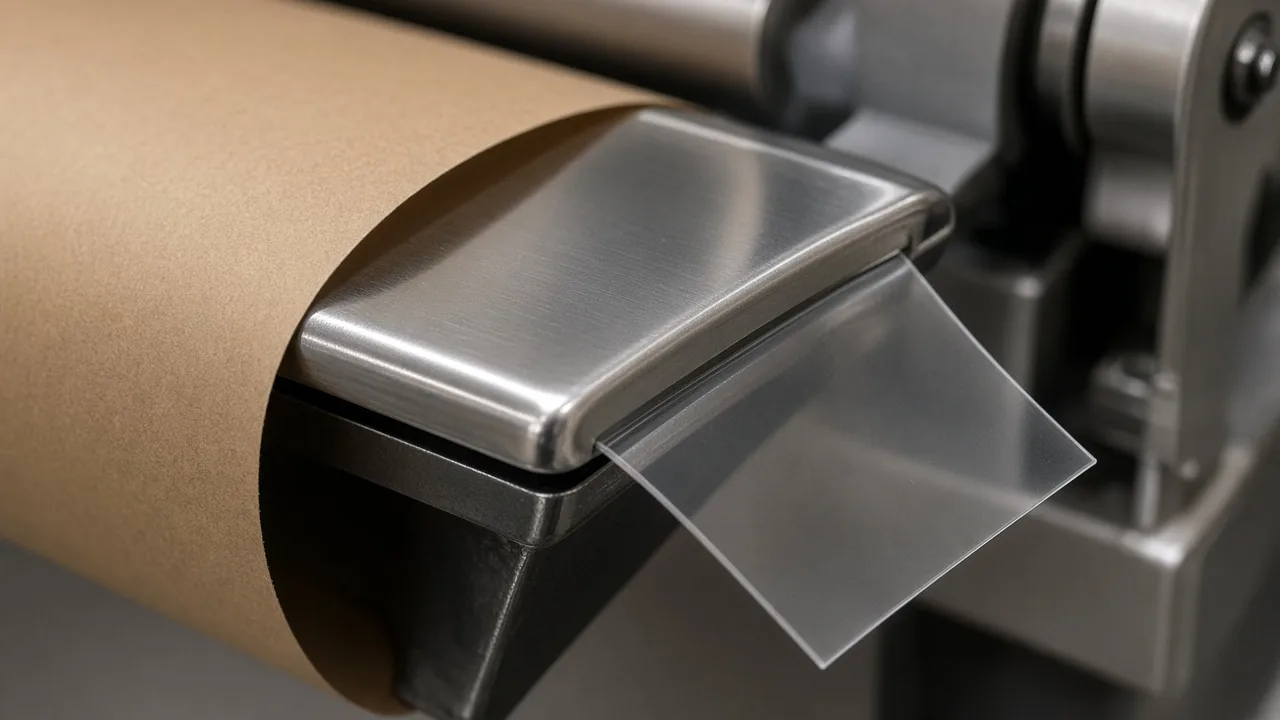
The sharp turn is the peel. Threading, flag length, and sensor position come from the head’s manual, not from this frame.
Rules of thumb
Rules of thumb. If the QLC 3115NV peel angle is outside 15–25°, or the edge is no longer 1/8 inch from the tallest or widest point, reset both before the trial pieces. If remaining clearance drops below 0 mm, the plate is into the container. If label length exceeds 50.8 mm on a Diagraph 7000 wipe, move the brush off the peel edge and set the brush to 45°. If label-tape thickness exceeds 0.9 mm, the KGUTI maximum is already passed. If the face stock is transparent, start from a family the matrix marks suited for transparent stock, which on this brochure is KGUTI or UGUTI, not OGUTI.
The first-piece identity check, separate from this geometry, stays on the workstation guide.